Kia Ora! Finally, we left Auckland and reached our destination by riding on a bus for about about 3 hours.
Once we arrived, we attended a welcome ceremony, had our first lunch and left for our fist experience at Kuirau Park Rotorua. Then we returned to the marae and organized different groups and activities. So much to do, so much to learn.
Here is image gallery showing what we did. Click each image to read the full description.
Riding the bus with old and new SB friends en route Rotorua.
Crowd just arrived and waiting for admission in the Te Takinga Marae after a welcome ceremony (pōhiri) to meet the community of Te Takinga Marae. The Marae is a sacred place where a local Maori community lives honoring its legacy back to the founding ancestors, but also looking at the challenges that the future will offer. This legacy is shared with visitors after a pohiri ceremony. During the pohiri we introduce ourselves declaring who we are, our mountain, our lake, and our ancestors. This is concluded by sharing of breath and touching our noses (hongi) to became part of the community forever. We are now admitted to the sacred sleeping quarters that will be our new home for the duration of the expedition. We will have meals together and sleep together in the marae (sorry, no pictures allowed!).
Starting ceremony where a woman announced the visit and led the guest into the building.
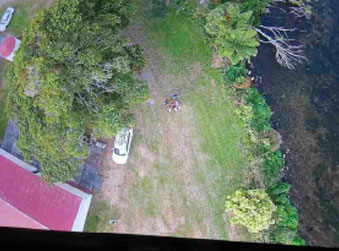
Aerial view of the marae.
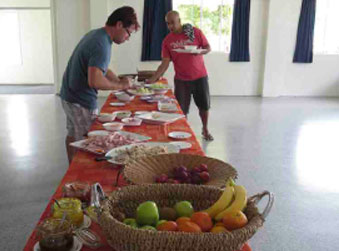
Our first meal together at the marae. In the forefront happy high school students from Auckland willing to learn astrobiology “stuff.”
Some of the food.
Kate explaining to new space explorers nuts and bolts of field observation practices and objectives.
Parag (JPL) and Carol Stoker (NASA Ames) getting temperature information of individual mud ponds.
Desiccating mud cracks covered by a patina of Sulfur-rich bright yellow mineral.
Kate’s favorite collection of siliceous materials form hot spring deposits. Structures are formed by mineralized microbial mats that preserve indicators of the hydrological features existing at the time of microbial growth.
Having a look at the materials
Eldar Noe-Dobrea showing how to identify the mineral composition of field samples with his Chemin Terra instrument. Terra is the field version of the flight Chemin instrument used by the Mars Science Laboratory Curiosity rover in Gale Crater on Mars.
Matt Reyes, Sanjoy Som and a quadricopter drone for remote investigation.
Haritina Mogusanu, the fantastic creator of SpacwardBound New Zealand, brainstorming on plans for next days.
The trip lasted 3.5 hours across the green fields of Hobbits’ land
An expedition through New Zealand with Rosalba Bonaccorsi